Retail
Shelf Compliance Explained: A Practical Guide for Retail Brands
Understand shelf compliance, common challenges, and how AI-powered tools help brands maintain consistent retail execution.

CEO - Pazo


Understand shelf compliance, common challenges, and how AI-powered tools help brands maintain consistent retail execution.
In modern retail, success isn’t decided at the warehouse — it’s decided on the shelf. Even the best supply chain, pricing strategy, or promotion fails if products are missing, misplaced, or incorrectly displayed in-store. This is where shelf compliance becomes critical.
Shelf compliance ensures that products are available, visible, correctly placed, and accurately priced on retail shelves, exactly as planned. For brands and retailers, it is one of the most important indicators of retail execution quality — directly influencing sales, shopper experience, and brand consistency.
As retail environments grow more complex and competitive, manual checks and delayed reports are no longer enough. Brands now need real-time, scalable shelf compliance visibility to protect revenue and improve in-store performance.
Shelf compliance refers to how accurately products on a retail shelf match predefined execution standards set by brands or retailers. These standards typically include product availability, correct placement, pricing accuracy, promotion execution, and planogram adherence.
In simple terms, shelf compliance answers questions like:
In retail environments, shelf compliance goes beyond a one-time check. It is a continuous measure of how well stores execute merchandising and availability guidelines at the point of sale. Poor shelf compliance often leads to out-of-stocks, misplaced SKUs, pricing errors, and lost sales, even when inventory exists in the backroom.
Unlike generic store audits, shelf compliance focuses specifically on what shoppers see and buy. It bridges the gap between planning at headquarters and execution inside the store — making it a critical metric for retail execution teams, sales leaders, and brand managers.
Shelf compliance directly influences what shoppers experience at the moment of purchase. Even small execution gaps on the shelf can lead to lost sales, reduced brand trust, and wasted promotional spend. In a highly competitive retail environment, these gaps add up quickly.
One of the biggest reasons shelf compliance matters is on-shelf availability. A product that is not visible on the shelf is effectively unavailable to the shopper — even if inventory exists in the store. Poor shelf compliance often results in phantom out-of-stocks, where sales are lost simply because products are not replenished or correctly displayed.
Shelf compliance also plays a critical role in shopper decision-making. Correct placement, adequate facings, and clear pricing improve product discoverability and influence impulse purchases. When shelves are cluttered, misaligned, or incorrectly priced, shoppers either choose a competitor or abandon the purchase altogether.
From a brand and retailer perspective, shelf compliance ensures:
In modern retail, shelf compliance is no longer a “nice to have” operational metric. It is a revenue-protection and growth driver that helps retailers and brands convert planning into actual in-store results.
Effective shelf compliance is not a single check — it is a combination of multiple execution factors working together on the retail shelf. When any one of these elements breaks down, overall compliance suffers and sales are impacted.
Below are the core elements of shelf compliance that brands and retailers must monitor consistently:
The foundation of shelf compliance is simple: the product must be available on the shelf. Empty shelf spaces, missing SKUs, or delayed replenishment lead directly to lost sales. Monitoring availability helps detect both true out-of-stocks and phantom out-of-stocks, where inventory exists but is not visible to shoppers.
Products need to be placed in the right location, at the right height, and with the correct number of facings. Incorrect placement reduces visibility and disrupts category flow. Facings are especially important, as insufficient facings increase the risk of frequent stockouts and lower brand presence.
Shelf compliance also includes ensuring that price labels, discounts, and promotions are accurate and up to date. Pricing mismatches between shelf labels and billing systems damage shopper trust and may result in regulatory issues, while poorly executed promotions waste trade spend.
Planograms define how shelves should be organized. Shelf compliance measures how closely actual shelf execution follows the planogram — including product order, spacing, and positioning. Deviations from the planogram often occur due to manual errors or store-level constraints, making regular monitoring essential.
Beyond individual product checks, shelf compliance looks at overall shelf presence. Measuring share of shelf helps brands understand whether their products receive the space and visibility agreed upon, compared to competing brands in the same category.
Together, these elements provide a complete view of how well retail shelves are executed — and where corrective actions are needed.
Despite clear guidelines and planning, maintaining consistent shelf compliance across stores is a major challenge for both retailers and brands. Execution gaps often occur at the store level, where conditions change daily and manual processes struggle to keep up.
Some of the most common shelf compliance challenges include:
Products may be available in the backroom but not replenished on time, or placed in the wrong section of the shelf. These issues reduce visibility and create phantom out-of-stocks, directly impacting sales.
Price labels not updated, expired promotions still displayed, or discounts not applied correctly are frequent compliance issues. These errors confuse shoppers, reduce trust, and lead to lost promotional ROI.
Stores often deviate from planograms due to space constraints, local preferences, or manual rearrangements. Without visibility, brands remain unaware that their shelf strategy is not being executed as planned.
Many retailers rely on periodic store visits or manual reporting. By the time an issue is identified, days or even weeks may have passed — resulting in extended revenue loss.
Traditional shelf compliance checks depend heavily on field teams, spreadsheets, and static photos. These methods are time-consuming, error-prone, and difficult to scale across hundreds or thousands of stores.
These challenges make it clear that shelf compliance is not just an operational issue — it is a visibility and execution problem that requires faster, more reliable monitoring.
Shelf compliance and planogram compliance are closely related, but they are not the same. Understanding the difference is essential for brands and retailers aiming to improve retail execution.
Planogram compliance focuses on whether a store follows the planned shelf layout — including product order, spacing, and positioning defined at headquarters. It answers the question: Is the shelf set up according to the plan?
Shelf compliance, on the other hand, is broader and more execution-driven. It evaluates whether the shelf is fully ready for shoppers at all times, covering:
In simple terms, planogram compliance is about design, while shelf compliance is about real-world execution. A store may initially comply with a planogram but still fail shelf compliance due to empty spaces, missing SKUs, or incorrect prices later in the day.
This is why tracking planogram compliance alone creates blind spots. Without shelf compliance monitoring, brands cannot see:
To achieve strong retail execution, brands must treat planogram compliance as a subset of shelf compliance — not a replacement for it. Together, they provide a complete picture of how shelves are planned, maintained, and experienced by shoppers.
Poor shelf compliance has a direct and measurable impact on both brands and retailers. When execution on the shelf breaks down, even the best product strategies fail to convert into sales.
One of the most immediate effects is lost revenue. Empty shelves, missing SKUs, or incorrect placement lead shoppers to choose competing products or leave without purchasing. Over time, these missed opportunities significantly reduce category and brand performance.
Shelf compliance issues also result in wasted trade and promotional spend. Promotions that are not correctly displayed or priced fail to influence shoppers, meaning brands pay for visibility and discounts that never reach the customer.
Inconsistent shelf execution further leads to:
For retailers, poor shelf compliance disrupts category management and reduces overall store efficiency. For brands, it creates a gap between planning and reality — where investments in marketing, promotions, and distribution do not deliver expected returns.
Ultimately, shelf compliance is not just an execution metric. It is a critical business driver that directly affects revenue, customer experience, and competitive positioning in retail.
For years, brands and retailers have relied on traditional methods to monitor shelf compliance. While these approaches laid the foundation for in-store execution, they struggle to keep up with the speed and scale of modern retail.
Field teams physically visit stores to check product placement, availability, and pricing. Although effective on a small scale, manual audits are time-consuming, costly, and provide only a snapshot of the shelf at a single point in time.
Sales representatives often report shelf conditions during store visits. This method depends heavily on manual inputs, making it prone to inconsistencies, bias, and incomplete data.
Some teams collect shelf photos for review. However, without automated analysis, these images require manual interpretation, delaying insights and limiting scalability.
Many organizations still rely on spreadsheets to track compliance metrics. These systems lack real-time updates, are difficult to maintain, and fail to provide actionable insights quickly.
The biggest limitation of traditional shelf compliance monitoring is delay. By the time issues are identified, sales opportunities are already lost. In a retail environment where shelves change multiple times a day, static and manual methods are no longer sufficient.
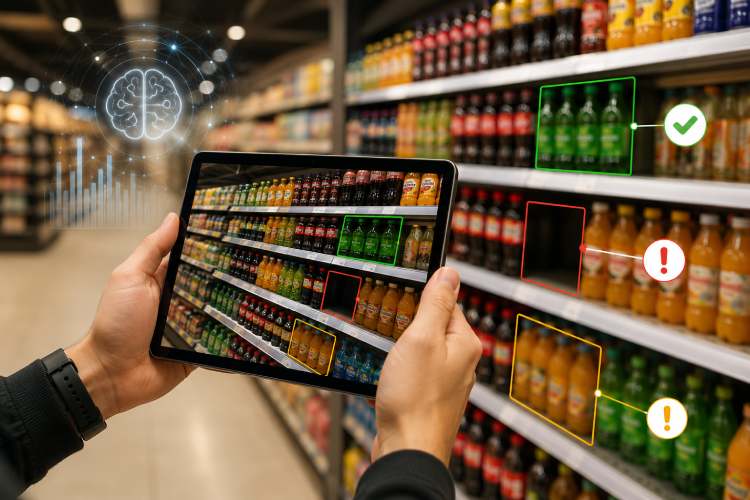
Artificial intelligence is redefining how brands and retailers monitor and improve shelf compliance. Instead of relying on periodic checks and delayed reports, AI enables continuous, real-time visibility into what is happening on retail shelves.
Using computer vision and image recognition, AI systems can analyze shelf images to automatically detect:
This automation eliminates manual interpretation and significantly reduces human error. Shelf data is processed instantly, allowing teams to identify issues as soon as they occur — not days later.
AI also enables compliance scoring, giving brands and retailers a clear, standardized way to measure shelf performance across stores, regions, and categories. Instead of relying on anecdotal feedback, teams gain objective insights that can be tracked over time.
Pazo enables brands and retailers to move from reactive shelf checks to intelligent, real-time shelf compliance management. By combining AI-powered image recognition with actionable retail execution workflows, Pazo provides complete visibility into in-store performance.
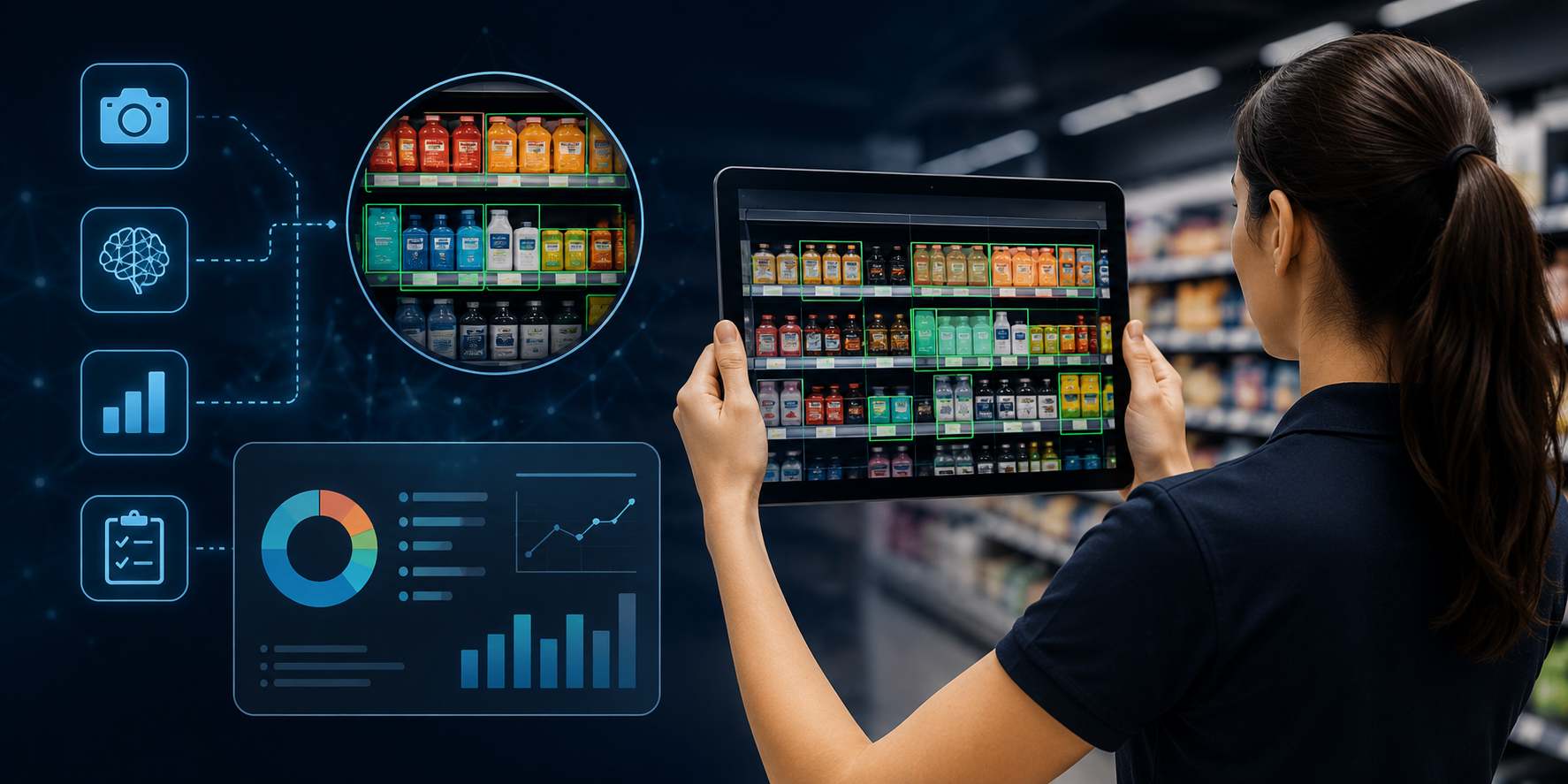
With Pazo, shelf images captured from stores are automatically analyzed to identify availability gaps, placement errors, pricing issues, and planogram deviations. This removes the need for manual interpretation and ensures consistent compliance measurement across all locations.
Pazo also transforms shelf data into clear, actionable insights. Instead of static reports, teams receive real-time dashboards that highlight where compliance is breaking down and which issues require immediate attention. This enables sales and operations teams to prioritize high-impact actions at the store level.
Key ways Pazo supports shelf compliance include:
By closing the gap between shelf data and action, Pazo helps brands ensure that execution standards are not just planned — but consistently delivered in-store.
Adopting AI-driven shelf compliance delivers measurable benefits across retail operations. With Pazo, brands and retailers gain more than visibility — they gain the ability to act faster and execute better at scale.
One of the biggest benefits is improved on-shelf availability. By identifying gaps early, teams can resolve issues before they lead to lost sales. This directly improves conversion at the shelf and reduces phantom out-of-stocks.
AI-driven shelf compliance also enables faster corrective actions. Instead of waiting for periodic audits, issues are flagged in near real time, allowing field teams to respond immediately and maintain consistent shelf standards.
Additional benefits include:
With Pazo, shelf compliance becomes a continuous process rather than a periodic check — helping brands protect revenue, improve shopper experience, and strengthen retail execution.
Improving shelf compliance requires more than monitoring — it requires consistent execution, accountability, and timely action. Brands and retailers that perform well in-store follow a set of proven best practices.
First, standardize shelf execution guidelines. Clear expectations around placement, facings, pricing, and promotions reduce ambiguity at the store level and make compliance easier to measure.
Second, monitor shelves continuously, not periodically. Shelf conditions change multiple times a day due to shopper activity and replenishment cycles. Continuous visibility helps detect issues early and prevents prolonged revenue loss.
Third, combine shelf compliance with planogram insights. Tracking both together provides a complete view of how shelves are designed and how they perform in real conditions.
Additional best practices include:
By following these practices, shelf compliance shifts from a reactive process to a strategic advantage — enabling stronger retail execution and more consistent in-store performance.
The future of shelf compliance is moving rapidly toward automation, intelligence, and prediction. As retail environments become more dynamic, brands can no longer rely on periodic checks or manual interventions to maintain execution standards.
AI-driven shelf compliance will evolve from detecting issues to predicting them before they occur. By analyzing historical shelf data, sales trends, and store behavior, retailers will be able to anticipate out-of-stocks, execution risks, and compliance failures in advance.
Another key shift will be the integration of shelf compliance with broader retail execution platforms. Instead of siloed tools, brands will use unified systems that connect shelf data with task management, sales performance, and store operations — enabling faster, more coordinated action.
In this future, shelf compliance will no longer be seen as a reporting metric. It will become a real-time decision engine, guiding where teams focus, how resources are allocated, and how in-store strategies are optimized.
Brands that adopt this approach early will gain stronger control at the point of sale — turning shelf execution into a sustained competitive advantage.
Shelf compliance is where retail strategy meets reality. Without consistent execution on the shelf, even the best products, pricing, and promotions fail to deliver results.
Pazo helps brands and retailers gain real-time visibility, accurate compliance measurement, and actionable insights to improve shelf execution at scale. By combining AI-powered shelf recognition with execution-focused workflows, Pazo ensures that compliance issues are identified early and resolved faster.
If you’re looking to reduce lost sales, improve in-store consistency, and maximize the ROI of your retail efforts, it’s time to move beyond manual checks and delayed reports.
As someone who has built highly scalable products from the ground up, I've always been drawn to solving challenging problems. But it's the quest for operational excellence that truly lights my fire. The thrill of streamlining processes, optimizing efficiency, and bringing out the best in a business – that's what gets me out of bed in the morning. Whether I'm knee-deep in programming or strategizing solutions, my focus is on creating a ripple effect of excellence that transforms not just businesses, but the industry at large. Ready to join forces and raise the bar for operational excellence? Let's connect and make retail operations and Facilities Management better, together.
Stay up to date with the latest video business news, strategies, and insights sent straight to your inbox!