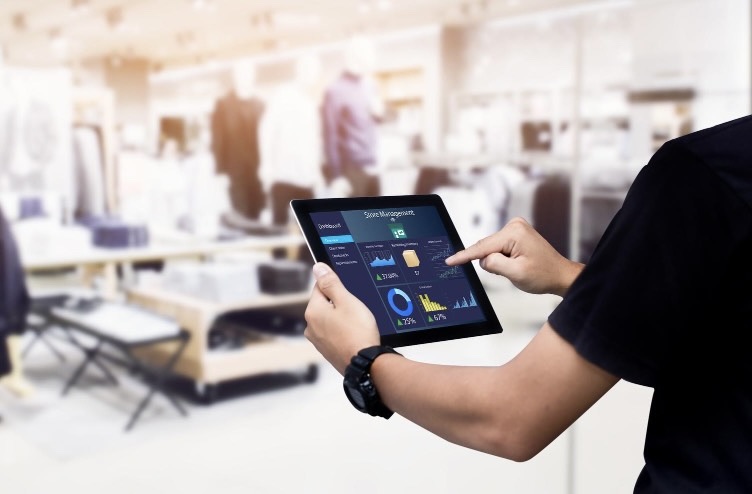
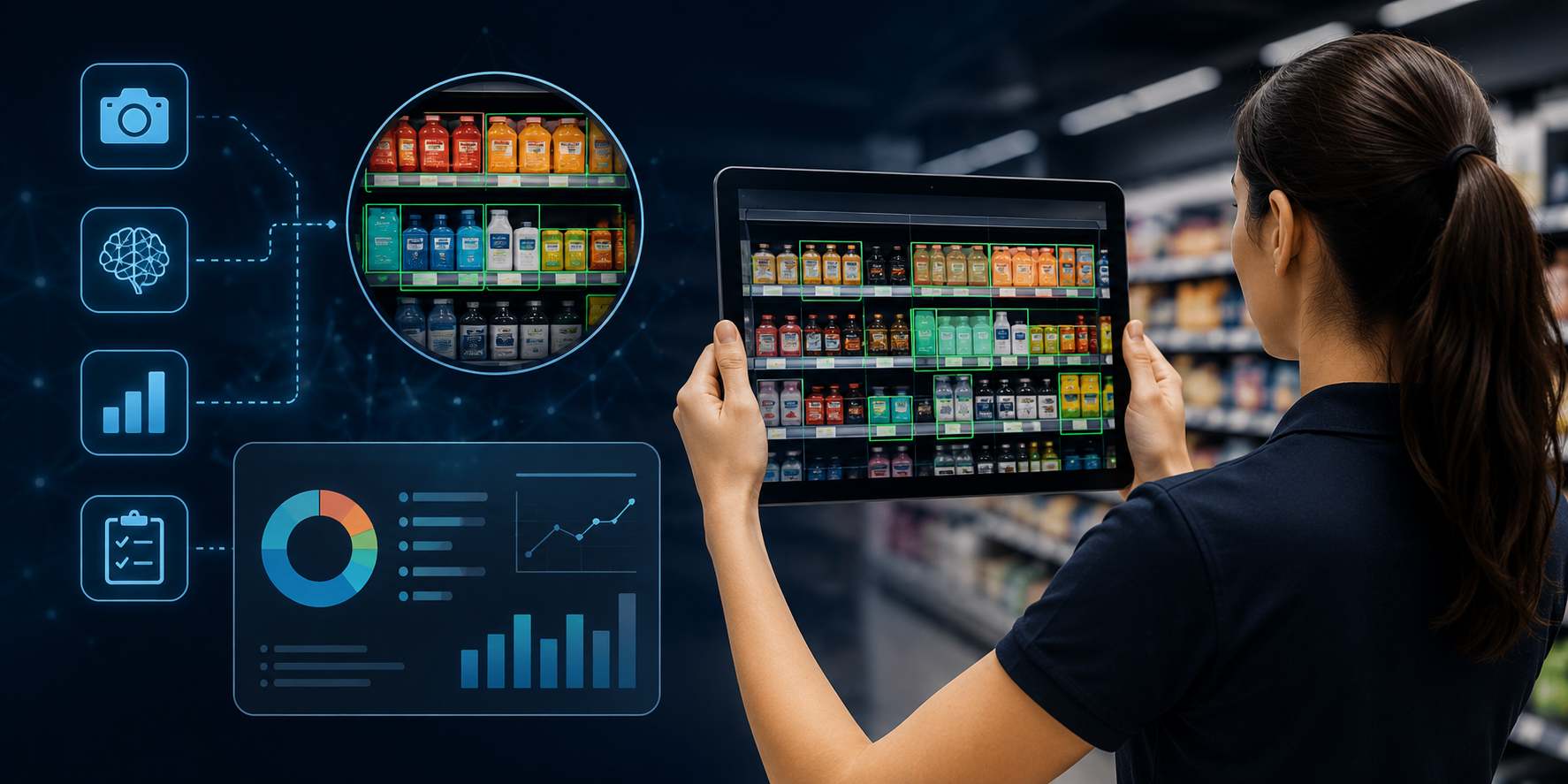
Retail execution monitoring has become the backbone of consistent in-store performance. It ensures that the strategies designed at the headquarters—product placement, promotions, pricing, visibility guidelines, operational routines, and brand standards—are actually executed correctly across every store. In today’s multi-store environment, this discipline directly shapes sales outcomes, shopper experience, and brand perception.
Modern retail moves too fast for guesswork. Without visibility into daily execution, even the strongest strategies lose impact. Retail execution monitoring gives retailers the ability to see what’s happening on the store floor in real time, identify deviations early, and maintain a predictable level of operational discipline. It brings together consistency, visibility, and accountability—three pillars that define high-performing retail networks.
What Is Retail Execution Monitoring?
Retail execution focuses on how stores operate each day, while retail execution monitoring ensures that this execution is trackable, verifiable, and compliant across all formats and regions. It gives retailers the visibility they need to maintain standards, prevent revenue loss, and deliver consistent customer experiences.
In simpler terms:
👉 Retail execution monitoring = consistency + visibility + accountability.
Retailers use monitoring systems to track critical in-store activities such as:
- Product availability and placement
- Display accuracy and planogram compliance
- Visual merchandising execution
- Promotion rollout timing and consistency
- Daily store routine and task completion
- Operational preparedness and hygiene levels
- Staff execution quality and follow-through
- Deviations and corrective actions
When done well, retail execution monitoring provides an uninterrupted view of how stores are performing against brand expectations. It helps leadership understand whether stores are aligned, where execution gaps exist, and what needs attention—before it affects customers or sales.
Why Retail Execution Monitoring Matters in Multi-Store Retail
Retail execution monitoring has become a critical discipline for multi-store brands because the gap between what is planned and what gets executed is often wider than expected. As store networks expand, maintaining consistency across locations becomes increasingly difficult. Monitoring enables retailers to stay aligned, react faster, and ensure that operational standards are upheld daily—not just during scheduled reviews.
Effective monitoring creates a unified view of store performance, helping HQ teams understand whether stores are implementing campaigns on time, following brand guidelines, and delivering the intended customer experience. When execution is tracked in real time, problems surface early, allowing retail leaders to correct issues before they affect customers or sales.
Retail Execution Strategies
Every successful retail brand follows a repeatable execution framework rather than relying on ad-hoc store activities. A well-defined retail execution strategy ensures that merchandising, promotions, inventory availability, store operations, and employee responsibilities work together to deliver a consistent customer experience across every location. As retail networks grow, having a documented strategy becomes critical for maintaining execution quality, measuring performance, and scaling operations effectively. If you're looking to build a structured execution framework, read our detailed guide on retail execution strategies every retailer should know.
Key Benefits of Retail Execution Monitoring
- Ensures consistent customer experience across all stores, regardless of region or format.
- Accelerates promotion and campaign activation, reducing delays that impact early-cycle sales.
- Reduces execution errors, ensuring guidelines are followed without interpretation gaps.
- Improves display compliance by ensuring shelves, planograms, and VM standards are executed accurately.
- Enables real-time decision-making, giving leadership live visibility into store-level activities.
- Drives higher sales, as correct execution directly influences product visibility and conversion.
Monitoring is not just an operational requirement—it is a core driver of retail performance at scale.
Retail Product Management
Retail execution is not limited to in-store activities—it begins with effective product planning and coordination across the entire retail organization. Decisions related to assortment planning, inventory availability, pricing, promotions, and merchandising directly influence how successfully products are executed at the store level. A structured retail product management process ensures that every product is supported with the right planning before it reaches the shelf, helping retailers improve availability, reduce execution errors, and deliver a consistent customer experience. Explore our comprehensive guide to retail product management to understand how planning and store execution work together to drive retail success.
Retail Product Placement
Successful retail execution depends not only on having the right products available but also on ensuring they are positioned where customers are most likely to notice and purchase them. Strategic retail product placement aligns merchandising objectives with shopper behavior, helping retailers improve product visibility, support promotional campaigns, and maximize sales opportunities. When executed consistently across every store, effective product placement strengthens brand presentation and creates a more engaging shopping experience. Explore our guide to retail product placement to learn the techniques and best practices for optimizing in-store product visibility.
Product Launch Execution
Retail execution becomes especially critical during new product launches, where even small inconsistencies can affect sales performance, customer experience, and brand perception. Successfully launching a product requires every store to receive the right inventory, promotional materials, merchandising instructions, and execution tasks at the right time. Standardized workflows and real-time execution visibility help retailers ensure that every location is launch-ready from day one. Discover how a structured retail product launch process helps brands deliver consistent product introductions across every store.
Challenges in Retail Execution Management
Retail execution management looks simple on paper, but inside a busy store environment, maintaining accuracy and consistency becomes one of the biggest operational challenges for multi-store retail brands. Even well-prepared guidelines and detailed instructions often break down during execution because store teams work under pressure, manage multiple priorities, and interpret directions differently. These gaps create inconsistencies that directly impact customer experience, promotion impact, and sales performance.
Below are the real, day-to-day challenges retailers struggle with while managing retail execution across multiple locations:
Delayed or Inconsistent Promotion Rollouts
- Stores activate campaigns at different times
- Early-cycle sales get lost because rollout is not synchronized
- Manual follow-ups slow down the process
Manual Reporting and Lack of Verifiable Data
- Execution updates come via WhatsApp, calls, and Excel
- No visual evidence to confirm accuracy
- HQ teams rely on unverified self-reporting
Store Teams Interpreting Guidelines Differently
- Same planogram implemented differently across outlets
- Variations in display height, grouping, and signage
- Customer experience becomes inconsistent
Inaccurate or Outdated Field Audits
- Field visits happen too late
- Deviations remain undetected for days or weeks
- Audits depend heavily on individual judgment
Limited Visibility for HQ & Regional Leaders
- No real-time view of what’s happening inside stores
- Operational blind spots slow down corrective actions
- Leaders cannot compare store performance objectively
No Unified System for Tasks, Checklists & Communication
- Instructions spread across multiple channels
- Tasks get missed due to fragmented communication
- Store staff lack a single source of truth
Deviation Tracking Happening Too Late
- Issues discovered only when sales drop
- Repetitive errors go unnoticed
- No structured way to track, classify, or reduce deviations
What Strong Retail Execution Monitoring Should Deliver
Effective retail execution monitoring is not just about observing store activities—it is about enabling accuracy, consistency, and timely action across every outlet. A strong monitoring system should reduce ambiguity, provide clarity to store teams, and give leaders the visibility required to make decisions without waiting for manual updates or delayed audits.
At its core, a modern monitoring approach must ensure that execution is predictable, measurable, and verifiable. The system should surface deviations early, support faster rollouts, and make it easy for operations, merchandising, and leadership teams to stay aligned on what’s happening inside each store.
To truly support multi-store retailers, retail execution monitoring must deliver:
- Real-time visibility into tasks, checklists, and store-level progress.
- Photo- and video-based execution proof, reducing uncertainty.
- Store-wise compliance scoring to identify strong and weak stores.
- Centralized SOPs, VM guidelines, and communication in one place.
- Data-backed insights that highlight repeated mistakes or gaps.
- Standardized workflows for daily operations, VM, and promotions.
- Instant deviation alerts before they impact sales or customer experience.
- Clear accountability, so every team knows what is expected and by when.
A monitoring system that enables these capabilities helps retailers move from reactive management to controlled, consistent, and high-performance store execution.
Future of Retail Execution
As retail operations become increasingly complex, the future of retail execution is being shaped by technologies such as artificial intelligence, computer vision, predictive analytics, and workflow automation. These innovations enable retailers to move beyond reactive store management toward proactive execution, giving field teams real-time visibility and helping brands maintain consistency across every location. Understanding these emerging trends is essential for retailers planning long-term operational success. Explore how leading brands are building the future of retail execution to stay ahead in an increasingly competitive retail landscape.
Workforce Enablement
Even the best retail execution processes depend on a well-equipped workforce. Today's frontline teams need more than traditional training—they require mobile-first workflows, instant access to standard operating procedures, real-time communication, and digital tools that help them execute tasks consistently across every store. Building a next-generation retail workforce enables retailers to improve execution quality, respond faster to operational challenges, and deliver a more consistent customer experience at scale. Discover how retailers are preparing their teams by transforming retail store operations to empower a next-generation workforce.
Multi-store Execution
Delivering consistent retail execution becomes significantly more challenging as businesses expand across multiple store locations. Ensuring that every store follows the same merchandising standards, promotional campaigns, operational procedures, and compliance requirements requires centralized visibility, standardized workflows, and effective communication between headquarters and frontline teams. Retailers that successfully scale their operations invest in processes and technology that support multi-store retail execution while maintaining a consistent customer experience across every location. Explore our guide on building a successful multi-store retail business to learn the best practices for scaling store operations effectively.
Retail Execution Best Practices
Effective retail execution monitoring is not only about tracking activities—it’s about ensuring that every store follows a consistent, repeatable, and measurable operational rhythm. Strong execution comes from disciplined processes, clear communication, and real-time oversight. The following best practices help retailers move from reactive correction to predictable, high-quality execution across all stores.
Key Retail Execution Best Practices
- Use standardized digital checklists
Replace manual forms with structured, consistent digital checklists to avoid ambiguity. - Define SLAs for every task
Clear timelines ensure promotions, displays, and store routines are completed without delays. - Monitor visual merchandising using photos + AI
This improves accuracy, reduces interpretation errors, and ensures display consistency. - Communicate through one unified platform
Avoid scattered WhatsApp messages and emails by centralizing execution instructions. - Conduct real-time audits instead of periodic reviews
Instant feedback prevents small issues from becoming recurring deviations. - Track performance using execution-focused KPIs
Compliance, task completion, and deviation trends offer actionable visibility. - Train store teams regularly
Continuous training ensures clarity on guidelines, display standards, and execution expectations. - Review deviation trends
Identifying recurring issues helps leaders resolve root causes instead of fixing symptoms.
Store-Level Execution
While retail execution defines the overall strategy for delivering a consistent in-store experience, its success depends on effective retail store execution at every location. This includes ensuring promotional campaigns are implemented correctly, products are merchandised according to planograms, inventory is available on the shelf, compliance standards are met, and frontline teams complete operational tasks consistently. Strong store execution enables retailers to maintain brand standards, improve customer satisfaction, and achieve operational excellence across every store. Explore our guide to retail store execution to learn how leading retailers standardize and optimize execution at the store level.
How Pazo Simplifies Retail Execution Monitoring
Effective retail execution monitoring requires precision, visibility, and timely feedback loops. Many retailers attempt to achieve this manually but struggle as store networks expand. Pazo helps simplify this process by bringing structure, clarity, and real-time insights into daily store operations—without adding complexity for store teams.
Pazo is designed to strengthen execution discipline by standardizing tasks, giving on-ground teams clear instructions, and providing leadership with a transparent view of what’s happening across all stores. It supports retailers by reducing operational blind spots, improving compliance, and enabling faster corrective actions.
Successfully improving retail execution requires more than adopting new technology—it requires partnering with a provider that understands the operational challenges of modern retail. From improving task execution and store compliance to enabling frontline teams with real-time visibility, the right partner can help retailers achieve consistent execution across every location. If you're evaluating solutions to modernize your store operations, explore why many retailers choose Pazo as their retail execution partner to simplify store execution and deliver measurable operational improvements.
How Pazo Supports Better Execution Monitoring
- Digital checklists for daily routines
Ensures every operational, hygiene, VM, and opening/closing checklist is completed consistently. - Photo-based verification for store activities
Teams can attach visual proof to each task, enabling faster validation and accountability. - AI-driven display compliance scoring
Helps identify deviations in planograms and visual setups instantly. - Real-time dashboards for leaders
HQ, regional managers, and supervisors get immediate visibility into store performance and pending tasks. - Automated reminders and escalations
Reduces delays and ensures critical tasks are completed within defined timelines. - Store performance intelligence
Identifies recurring issues, tracks compliance trends, and highlights stores that need attention.
Pazo’s approach is to simplify execution—not add more work—ensuring that teams stay aligned and that retail execution remains consistent across locations.
KPIs That Matter in Retail Execution Monitoring
Measuring retail execution without the right KPIs leads to partial visibility and reactive decision-making. The goal of retail execution monitoring is not only to track activity, but also to understand whether execution is accurate, consistent, and timely across all stores. The following KPIs help retailers move from assumption-driven operations to clear, data-backed execution control.
A strong monitoring framework should track:
• Display Compliance Score
Indicates how accurately stores follow visual guidelines, planograms, and brand standards. Higher compliance correlates directly with stronger conversion rates.
• Task Completion Rate
Shows how many daily/weekly tasks were completed on time. Useful for identifying stores that frequently delay operational routines.
• Promotion Activation Time
Measures how quickly campaigns go live across the network. Even a 24-hour delay can impact revenue, especially during peak retail periods.
• Deviation Frequency
Highlights recurring execution issues. Frequent deviations often signal unclear guidelines or inadequate store-level training.
• Store-wise Execution Scorecard
A consolidated view of each store’s performance—useful for regional managers to prioritize support and coaching.
• SLA Adherence
Tracks whether stores complete tasks within the expected timeframe, helping teams stay disciplined and responsive.
Monitoring these KPIs regularly allows retailers to reduce operational blind spots and maintain consistent execution across every outlet.
Retail Execution Software
While clearly defined processes are essential, maintaining consistent retail execution across multiple stores requires the right technology. A modern retail execution software solution helps retailers digitize store operations, automate task management, monitor merchandising compliance, conduct store audits, and provide real-time visibility into execution performance. By replacing manual processes with connected workflows, retailers can improve operational consistency, respond faster to issues, and deliver a more reliable in-store experience. Learn how retail execution software enables retailers to execute with greater accuracy and efficiency across every location.
New product launches are among the most execution-intensive activities in retail, requiring every store to implement merchandising plans, promotional materials, pricing updates, inventory availability, and operational tasks within tight timelines. Even small execution gaps can impact customer experience and product performance. A dedicated retail product launch software solution helps retailers coordinate launch activities, assign store-level tasks, monitor execution progress in real time, and ensure every location is ready for a successful rollout. Explore how retail product launch software helps retailers deliver consistent launches across every store.
Conclusion
Retail organizations invest heavily in planning, visual guidelines, and promotions—but the real impact is determined by how consistently these plans are executed across every store. Retail execution monitoring closes the gap between intent and implementation by giving brands real-time visibility, verifiable data, and the ability to act before small deviations turn into larger business losses.
Modern retail no longer has room for delayed audits, ambiguous reporting, or inconsistent store performance. With the right monitoring approach, retailers can ensure that each outlet follows the same standards, launches campaigns on time, and maintains the brand experience customers expect. Technology plays a crucial enabling role—not by replacing store teams, but by helping them execute with clarity, accuracy, and accountability.
When retailers strengthen monitoring, they gain operational control, reduce execution errors, and unlock faster, more predictable performance across their network. In a market where every detail matters, execution—not strategy—becomes the true competitive advantage.
Take Control of Retail Operations
Connect Store Teams, Tasks & Execution
Standardize workflows, assign store tasks, verify execution and get visibility across locations with Pazo.
Book a 30-Minute Conversation
→
Stay up to date with the latest video business news, strategies, and insights sent straight to your inbox!