Facility maintenance is a critical part of ensuring that operations run smoothly without disruptions. From equipment and infrastructure to safety systems, regular maintenance is essential to keep everything functioning efficiently. However, many organizations still rely on reactive maintenance—fixing issues only after they occur—which often leads to unexpected breakdowns, higher costs, and operational delays.
As facilities become more complex, managing maintenance manually becomes increasingly difficult. Missed schedules, lack of visibility, and poor coordination can result in reduced asset lifespan and compliance risks. This is why businesses are shifting towards structured facility maintenance management systems that focus on planning, tracking, and optimizing maintenance activities.
By adopting a proactive approach, especially through preventive maintenance, organizations can reduce downtime, improve efficiency, and ensure consistent performance. A well-defined maintenance process and plan not only helps in avoiding major failures but also supports long-term operational stability.
What is Facility Maintenance?
Facility maintenance refers to the ongoing process of maintaining, repairing, and servicing a facility’s infrastructure, equipment, and systems to ensure smooth and uninterrupted operations. It includes activities such as routine inspections, preventive servicing, and corrective repairs to keep assets in optimal condition. Facility maintenance is not limited to fixing issues—it also focuses on preventing failures before they occur.
In modern operations, facility maintenance plays a key role in improving efficiency, reducing downtime, and ensuring safety compliance. Poor maintenance can lead to equipment breakdowns, safety hazards, and increased operational costs. On the other hand, a well-managed maintenance system ensures that all assets are functioning reliably and efficiently.
Facility maintenance typically covers a wide range of areas, including electrical systems, HVAC, plumbing, safety equipment, and building infrastructure. By managing these components effectively, organizations can maintain a safe and productive environment while optimizing long-term performance.
Types of Facility Maintenance
Facility maintenance can be categorized into different types based on how and when maintenance activities are performed. Understanding these types helps organizations choose the right approach for managing their assets and preventing failures. Each type serves a specific purpose, and an effective maintenance strategy often combines multiple approaches. By using the right mix, businesses can reduce downtime, control costs, and improve overall operational efficiency.
Preventive Maintenance
Preventive maintenance involves performing regular, scheduled maintenance activities to prevent equipment failures before they occur. This approach is proactive and focuses on maintaining assets in good condition through routine checks and servicing.
Preventive maintenance is essential for reducing unexpected breakdowns and extending the lifespan of equipment. It also helps maintain safety standards and ensures consistent performance across operations.
Examples:
Scheduled servicing of HVAC systems
Routine inspection of electrical equipment
Regular lubrication of machinery
Periodic safety system checks
Reactive Maintenance
Reactive maintenance, also known as breakdown maintenance, involves fixing equipment only after it fails. This approach is unplanned and typically results in higher costs due to emergency repairs and operational downtime.
While reactive maintenance may seem cost-effective initially, it often leads to long-term inefficiencies and disruptions. It is usually used for non-critical assets where failure does not significantly impact operations.
Examples:
Repairing equipment after a breakdown
Fixing electrical faults when they occur
Replacing damaged components after failure
Predictive Maintenance
Predictive maintenance uses data and monitoring tools to predict when equipment is likely to fail. This approach allows organizations to perform maintenance only when needed, reducing unnecessary servicing while preventing breakdowns.
It is a more advanced approach that combines technology and data analysis to optimize maintenance schedules. Predictive maintenance helps improve efficiency and reduce costs by minimizing both downtime and over-maintenance.
Examples:
Monitoring equipment performance using sensors
Analyzing data to predict failures
Scheduling maintenance based on condition rather than time
What is Facility Maintenance Management?
Facility maintenance management refers to the structured process of planning, organizing, executing, and tracking all maintenance activities within a facility. It ensures that maintenance tasks are not handled randomly but are managed through defined workflows, schedules, and responsibilities. This approach helps organizations move from reactive maintenance to a more controlled and proactive system.
In many organizations, maintenance activities are often scattered across teams, making it difficult to track what has been completed and what is pending. Facility maintenance management solves this by centralizing all maintenance operations, providing visibility into tasks, and ensuring accountability. It enables managers to schedule maintenance, assign responsibilities, and monitor execution in real time.
A well-implemented maintenance management system helps reduce equipment failures, improve asset performance, and ensure compliance with safety standards. It also allows organizations to optimize resources and reduce operational costs by avoiding unnecessary repairs and downtime.
Challenges Without Proper Maintenance Management
Missed maintenance schedules leading to unexpected breakdowns
Lack of visibility into maintenance activities
Poor coordination between teams
Increased repair costs due to reactive maintenance
Difficulty maintaining compliance and safety standards
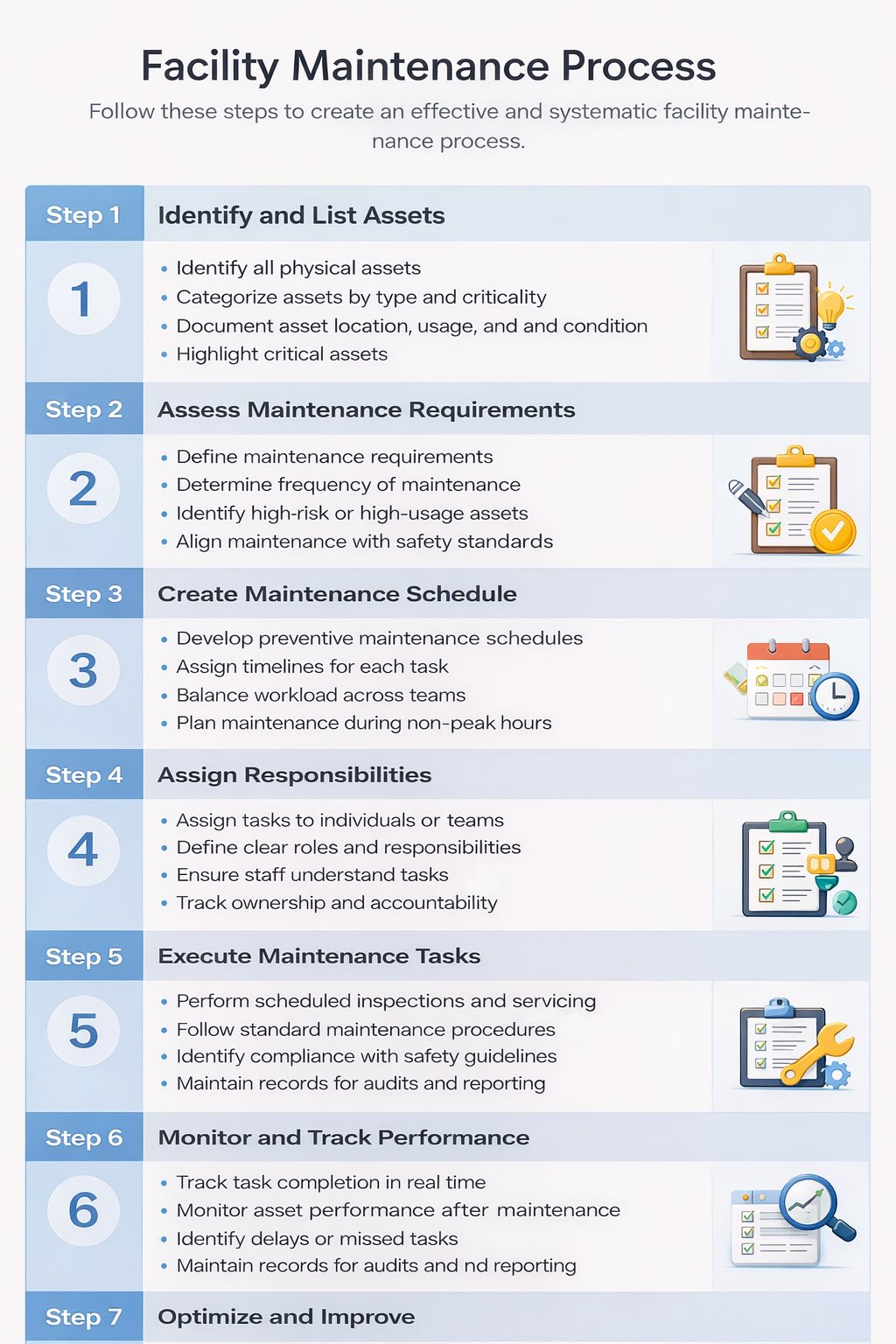
Facility Maintenance Process
A structured facility maintenance process is essential for ensuring that all maintenance activities are carried out consistently and efficiently. Without a defined process, maintenance often becomes reactive—addressing issues only after they occur—leading to unexpected breakdowns, higher costs, and operational disruptions. A well-designed process helps organizations plan, execute, and monitor maintenance activities in a systematic way. It also improves visibility, accountability, and coordination across teams, especially in multi-location environments.
By following a step-by-step maintenance process, organizations can reduce downtime, extend asset lifespan, and ensure compliance with safety standards. The goal is to move from a reactive approach to a proactive system where maintenance is planned, tracked, and continuously improved.
Step 1: Identify and List Assets
The first step is to create a comprehensive list of all assets within the facility. This includes equipment, infrastructure, and systems that require maintenance. Without a clear inventory, it becomes difficult to track maintenance needs or prioritize tasks.
Key Actions:
Identify all physical assets (equipment, systems, infrastructure)
Categorize assets based on type and criticality
Document asset details such as location, usage, and condition
Highlight critical assets that impact operations
Step 2: Assess Maintenance Requirements
Once assets are identified, the next step is to determine their maintenance needs. Different assets require different types of maintenance based on usage, condition, and importance.
Key Actions:
Define maintenance requirements for each asset
Determine frequency of maintenance (daily, weekly, monthly)
Identify high-risk or high-usage assets
Align maintenance needs with safety and compliance standards
Step 3: Create Maintenance Schedule
A structured maintenance schedule ensures that tasks are performed at the right time. Scheduling helps avoid last-minute repairs and ensures that preventive maintenance is carried out consistently.
Key Actions:
Develop preventive maintenance schedules
Assign timelines for each task
Balance workload across teams
Plan maintenance during non-peak hours
Step 4: Assign Responsibilities
Assigning clear ownership ensures that maintenance tasks are completed on time. Without accountability, tasks may be delayed or missed.
Key Actions:
Assign tasks to specific individuals or teams
Define roles and responsibilities clearly
Ensure staff understand their tasks
Track ownership and accountability
Step 5: Execute Maintenance Tasks
This step involves performing maintenance activities as per the defined schedule and procedures. Consistent execution is critical for maintaining asset performance and preventing failures.
Key Actions:
Perform scheduled inspections and servicing
Follow standard maintenance procedures
Ensure compliance with safety guidelines
Complete tasks within defined timelines
Step 6: Monitor and Track Performance
Monitoring ensures that maintenance activities are completed effectively. It also provides visibility into performance and helps identify gaps.
Key Actions:
Track task completion in real time
Monitor asset performance after maintenance
Identify delays or missed tasks
Maintain records for audits and reporting
Step 7: Optimize and Improve
Maintenance processes should be continuously reviewed and improved. This helps address inefficiencies and adapt to changing operational needs.
Key Actions:
Analyze maintenance data and trends
Identify recurring issues
Improve schedules and processes
Implement corrective actions
Facility Maintenance Plan
A facility maintenance plan is a structured document that outlines how maintenance activities will be carried out across a facility. It defines what needs to be maintained, how often tasks should be performed, who is responsible, and how activities will be tracked. Without a proper plan, maintenance becomes inconsistent and reactive, leading to missed tasks, equipment failures, and increased operational costs.
A well-defined maintenance plan ensures that all assets are maintained proactively and systematically. It helps organizations stay organized, reduce downtime, and improve asset reliability. It also plays a crucial role in compliance by ensuring that safety and regulatory requirements are consistently met.
Key Components of a Facility Maintenance Plan
Asset Inventory
A complete list of all assets that require maintenance, including equipment, systems, and infrastructure. This helps ensure that no critical asset is overlooked.
Maintenance Schedule
Defines how often maintenance tasks should be performed (daily, weekly, monthly). A clear schedule helps prevent delays and ensures consistency.
Task Procedures
Detailed instructions on how each maintenance task should be performed. This ensures standardization and reduces errors during execution.
Roles and Responsibilities
Clearly defines who is responsible for each maintenance activity. This improves accountability and ensures timely completion of tasks.
Tracking and Monitoring System
A system to track maintenance activities, monitor performance, and maintain records. This helps in identifying issues and ensuring compliance.
Benefits of a Maintenance Plan
Reduces unexpected equipment failures
Improves operational efficiency
Extends asset lifespan
Ensures compliance with safety standards
Provides better control over maintenance activities
Preventive Maintenance in Facility Management
Preventive maintenance is one of the most important components of effective facility maintenance management. It focuses on performing regular, scheduled maintenance activities to prevent equipment failures before they occur. Unlike reactive maintenance, which addresses issues after breakdowns, preventive maintenance ensures that assets are maintained proactively to avoid disruptions. This approach helps organizations maintain operational stability and reduce unexpected downtime.
In facilities where equipment and infrastructure are critical to operations, preventive maintenance plays a key role in ensuring reliability and safety. Regular inspections, servicing, and timely replacements help identify potential issues early and prevent costly failures. It also improves compliance by ensuring that safety systems and critical equipment are always in proper working condition.
Why Preventive Maintenance is Important
Reduces unexpected equipment breakdowns
Minimizes operational downtime
Extends the lifespan of assets
Improves safety and compliance
Reduces long-term maintenance costs
Examples of Preventive Maintenance
Scheduled servicing of HVAC systems
Routine inspection of electrical and safety systems
Regular lubrication and cleaning of machinery
Periodic testing of backup systems and alarms
Preventive vs Reactive Maintenance
Preventive Maintenance
Approach: Proactive
Timing: Scheduled at regular intervals
Cost: Lower in the long run
Downtime: Minimal disruptions
Risk: Reduced risk of failures
Reactive Maintenance
Approach: Reactive
Timing: Performed after equipment failure
Cost: Higher due to emergency repairs
Downtime: High and unpredictable
Risk: Increased risk of operational issues
Facility Maintenance Checklist
A facility maintenance checklist ensures that all maintenance activities are carried out consistently and nothing is overlooked. In complex environments, relying on memory or manual coordination often leads to missed tasks, delayed repairs, and operational inefficiencies. A structured checklist provides clarity to teams, improves accountability, and ensures that maintenance is performed on time. It also helps standardize processes across different shifts and locations, making maintenance more predictable and efficient.
By using a well-defined checklist, organizations can move towards a proactive maintenance approach, reduce downtime, and maintain asset performance effectively.
Daily Maintenance Checklist
Daily tasks focus on routine inspections and basic maintenance activities that keep the facility running smoothly. These tasks help identify issues early and prevent disruptions.
Key Tasks:
Inspect critical equipment for any visible issues
Check electrical systems and safety equipment
Ensure cleanliness and proper functioning of work areas
Monitor ongoing maintenance or repair activities
Report any abnormalities or issues immediately
Weekly Maintenance Checklist
Weekly tasks involve more detailed inspections and preventive maintenance activities. These help identify potential problems before they become major issues.
Key Tasks:
Perform detailed inspection of equipment and systems
Test safety systems such as alarms and backup units
Review pending maintenance tasks and schedules
Check inventory of maintenance tools and supplies
Verify compliance with maintenance procedures
Monthly Maintenance Checklist
Monthly tasks focus on comprehensive inspections, performance evaluation, and long-term planning. These tasks help ensure sustained facility performance and efficiency.
Key Tasks:
Conduct full facility inspection
Review maintenance records and asset performance
Evaluate compliance with safety and regulatory standards
Identify recurring issues and improvement areas
Plan upcoming maintenance and upgrades
Common Challenges in Facility Maintenance
Managing facility maintenance effectively can be challenging due to the complexity of assets, frequency of tasks, and coordination required between teams. Many organizations struggle to maintain consistency, especially when relying on manual processes or disconnected systems. Without a structured approach, maintenance often becomes reactive, leading to breakdowns, delays, and increased costs. Understanding these challenges is essential for building a more efficient and proactive maintenance system.
Common Challenges in Facility Maintenance
Lack of Preventive Maintenance Planning
Many organizations focus on fixing issues after they occur rather than preventing them. This leads to frequent breakdowns and higher maintenance costs over time.
Over-Reliance on Manual Processes
Using spreadsheets or paper-based systems makes it difficult to track maintenance activities accurately. This often results in missed schedules and lack of accountability.
Limited Visibility into Maintenance Activities
Managers often lack real-time insights into maintenance tasks. Without visibility, it becomes difficult to identify delays or unresolved issues.
Missed Maintenance Schedules
Failure to follow maintenance schedules can lead to equipment failures and operational disruptions. This is often caused by poor planning or lack of tracking.
Inefficient Resource Allocation
Improper assignment of tasks and resources can lead to delays and inefficiencies. Without clear planning, teams may be overburdened or underutilized.
Role of Technology in Facility Maintenance Management
Technology plays a crucial role in transforming facility maintenance from a reactive, manual process into a structured and proactive system. Traditional methods such as paper logs and spreadsheets often lead to missed schedules, lack of visibility, and poor coordination between teams. Digital tools help standardize maintenance workflows, automate scheduling, and provide real-time insights into ongoing activities. This enables organizations to manage maintenance more efficiently and reduce operational risks.
With the use of technology, maintenance teams can track tasks, monitor asset performance, and ensure that all activities are completed on time. It also helps maintain accurate records for audits and compliance, which is critical in regulated environments. For organizations managing multiple facilities, technology provides centralized control and ensures consistency across all locations.
How Technology Supports Facility Maintenance
Automates maintenance scheduling and task assignments
Provides real-time visibility into maintenance activities
Enables better coordination between teams
Maintains accurate records for compliance and audits
Helps monitor asset performance and maintenance history
How Pazo Helps in Facility Maintenance
Managing facility maintenance effectively requires more than just creating schedules—it requires ensuring that every maintenance task is executed on time, tracked properly, and monitored continuously. Pazo helps organizations achieve this by transforming maintenance activities into structured, trackable workflows. Instead of relying on manual systems, teams can follow clearly defined tasks with real-time updates, ensuring that no maintenance activity is missed.
Pazo provides a centralized platform where all maintenance operations—preventive tasks, inspections, and repairs—can be managed efficiently. Managers gain complete visibility into ongoing activities, making it easier to track progress, identify delays, and take corrective action quickly. This reduces downtime and ensures that assets are maintained consistently across all locations.
In addition, Pazo improves accountability by assigning clear ownership for every maintenance task. Teams know exactly what needs to be done and when, reducing confusion and improving execution. Features like photo-based verification and activity tracking ensure that tasks are not just completed, but completed correctly. This is especially important for maintaining compliance and audit readiness.
By digitizing maintenance workflows and providing real-time insights, Pazo helps organizations shift from reactive maintenance to a proactive and data-driven approach. This leads to improved efficiency, reduced costs, and better control over facility maintenance operations.
How Pazo Improves Facility Maintenance
Converts maintenance tasks into structured, trackable workflows
Provides real-time visibility into maintenance activities
Ensures accountability with clear task ownership
Enables faster identification and resolution of issues
Supports compliance with audit-ready records and verification
Centralizes maintenance data for better decision-making
Best Practices for Facility Maintenance
To ensure effective facility maintenance, organizations need to adopt structured and proactive practices rather than relying on reactive fixes. Consistent maintenance execution, proper planning, and continuous monitoring are essential for maintaining asset performance and operational efficiency. By following best practices, businesses can reduce downtime, control costs, and extend the lifespan of their assets. Facility maintenance should be treated as an ongoing system that evolves with operational needs.
Best Practices for Facility Maintenance
Adopt Preventive Maintenance Approach Focus on scheduled maintenance activities to prevent equipment failures instead of reacting to breakdowns. This improves reliability and reduces long-term costs.
Standardize Maintenance Processes Define clear procedures for all maintenance tasks to ensure consistency across teams and locations. Standardization reduces errors and improves efficiency.
Ensure Real-Time Tracking and Monitoring Track maintenance activities in real time to identify delays or missed tasks. This improves visibility and helps in taking timely corrective actions.
Train Maintenance Teams Regularly Ensure that staff are well-trained in maintenance procedures and safety standards. Proper training improves execution quality and reduces risks.
Maintain Accurate Documentation Keep detailed records of maintenance activities, asset history, and inspections. This helps in audits, compliance, and performance analysis.
Continuously Optimize Maintenance Processes Regularly review maintenance performance, identify inefficiencies, and update processes to improve overall effectiveness.
Conclusion
Facility maintenance is a critical function that directly impacts operational efficiency, safety, and asset performance. Without a structured approach, maintenance activities can become reactive, leading to unexpected breakdowns, higher costs, and operational disruptions. By implementing a well-defined facility maintenance management system, organizations can plan, execute, and monitor maintenance activities more effectively.
A proactive approach, especially through preventive maintenance, helps reduce downtime, extend asset lifespan, and ensure consistent performance across operations. Combined with a clear maintenance process and plan, businesses can maintain better control over their facilities and avoid costly failures.
Digital solutions like Pazo further enhance maintenance management by providing real-time visibility, accountability, and structured workflows. This enables organizations to move from reactive maintenance to a proactive, data-driven system that improves efficiency and ensures long-term operational stability.
FAQs on Facility Maintenance
1. What is the meaning of facility maintenance?
Facility maintenance refers to the ongoing process of maintaining, repairing, and servicing a building’s infrastructure, equipment, and systems to ensure smooth and efficient operations. It includes preventive, corrective, and routine maintenance activities.
2. What does facility maintenance do?
Facility maintenance ensures that all equipment and systems within a facility function properly. It involves inspections, repairs, servicing, and preventive maintenance to reduce downtime, improve safety, and maintain operational efficiency.
3. Is facility management a good career?
Yes, facility management is a growing and stable career with increasing demand across industries. As businesses expand and infrastructure becomes more complex, skilled professionals are needed to manage operations, maintenance, and compliance effectively.
4. What are the 4 types of maintenance?
The four main types of maintenance are:
Preventive Maintenance: Scheduled maintenance to prevent failures
Reactive Maintenance: Repairs after equipment breakdown
Predictive Maintenance: Maintenance based on data and condition monitoring
Corrective Maintenance: Fixing identified issues before failure occurs
Facility Operations
Connect Facility Teams, Tasks & Execution
Standardize maintenance workflows, assign tasks, track completion and verify work across facilities and locations.
As someone who has built highly scalable products from the ground up, I've always been drawn to solving challenging problems. But it's the quest for operational excellence that truly lights my fire. The thrill of streamlining processes, optimizing efficiency, and bringing out the best in a business – that's what gets me out of bed in the morning. Whether I'm knee-deep in programming or strategizing solutions, my focus is on creating a ripple effect of excellence that transforms not just businesses, but the industry at large. Ready to join forces and raise the bar for operational excellence? Let's connect and make retail operations and Facilities Management better, together.
Enjoyed this read?
Stay up to date with the latest video business news, strategies, and insights sent straight to your inbox!
Thank you! Your submission has been received!
Oops! Something went wrong while submitting the form.