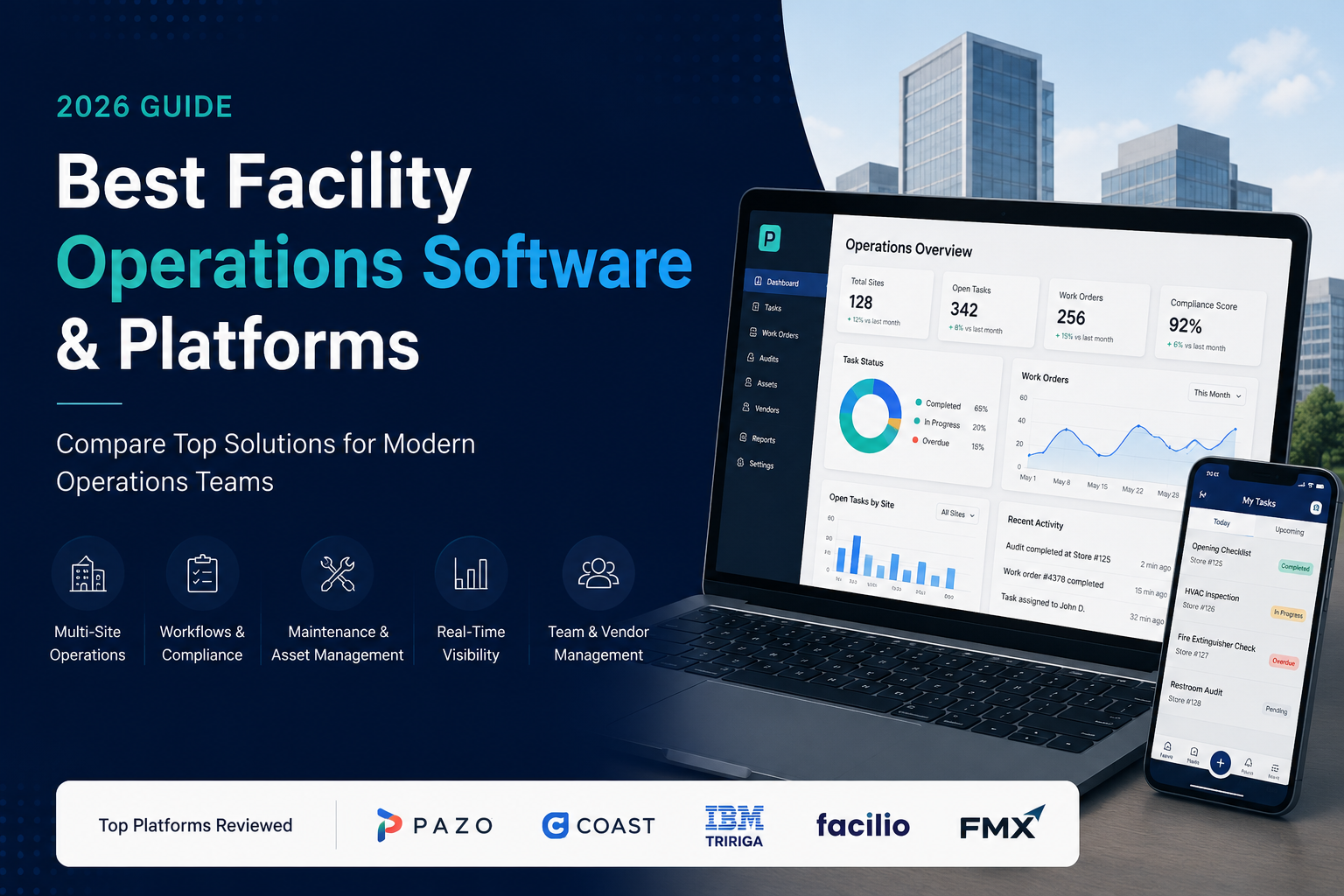
Facility operations has evolved far beyond maintenance ticketing and reactive work orders. Modern operations teams now manage:
Multi-site operations
Asset lifecycle tracking
Preventive maintenance
Vendor coordination
Energy monitoring
Compliance workflows
Workforce productivity
Space utilization
Real-time operational visibility
This is why companies are increasingly searching for facility operations software instead of traditional “facility management software.”
Most existing comparison pages still focus heavily on maintenance management. But operations leaders today need software that connects maintenance, operations, assets, analytics, and execution in one platform.
What Is Facility Operations Software?
Facility operations software is a centralized platform that helps businesses manage day-to-day operational activities across buildings, assets, technicians, vendors, compliance workflows, and service operations.
Unlike traditional facility management tools that primarily focus on maintenance tickets, facility operations software enables:
Real-time operational visibility
Cross-functional workflow automation
Asset performance monitoring
Multi-location operations control
Predictive maintenance
Vendor and workforce coordination
Data-driven operational decisions
Modern platforms combine capabilities traditionally spread across:
CMMS
CAFM
EAM
IWMS
Field operations software
Maintenance management systems
Why Businesses Are Moving from “Facility Management” to “Facility Operations”
Traditional Facility Management Software Focuses On:
Work orders
Maintenance logs
Asset records
Preventive maintenance schedules
Modern Facility Operations Teams Need:
Operational intelligence
SLA tracking
Vendor performance management
Multi-site visibility
Workflow automation
Mobile-first execution
Analytics dashboards
Compliance monitoring
Cross-team collaboration
AI-driven operational insights
This shift is why Google is increasingly rewarding broader “operations” content intent instead of purely maintenance-focused pages.
Best Facility Operations Software Platforms in 2026
1. Pazo — Best Facility Operations Software for Multi-Site Operations
Best For
Retail chains, enterprise operations teams, distributed facilities, and field execution workflows.
Why Pazo Ranks #1
Pazo is built specifically for operational execution — not just maintenance management.
While many traditional facility management platforms focus primarily on tickets and preventive maintenance, Pazo focuses on helping operations teams standardize, monitor, and optimize daily execution across locations.
Key Facility Operations Capabilities
SOP execution workflows
Multi-location task management
Real-time audit tracking
Mobile-first field operations
Vendor coordination
Compliance monitoring
Issue escalation workflows
Operational analytics dashboards
Workforce accountability tracking
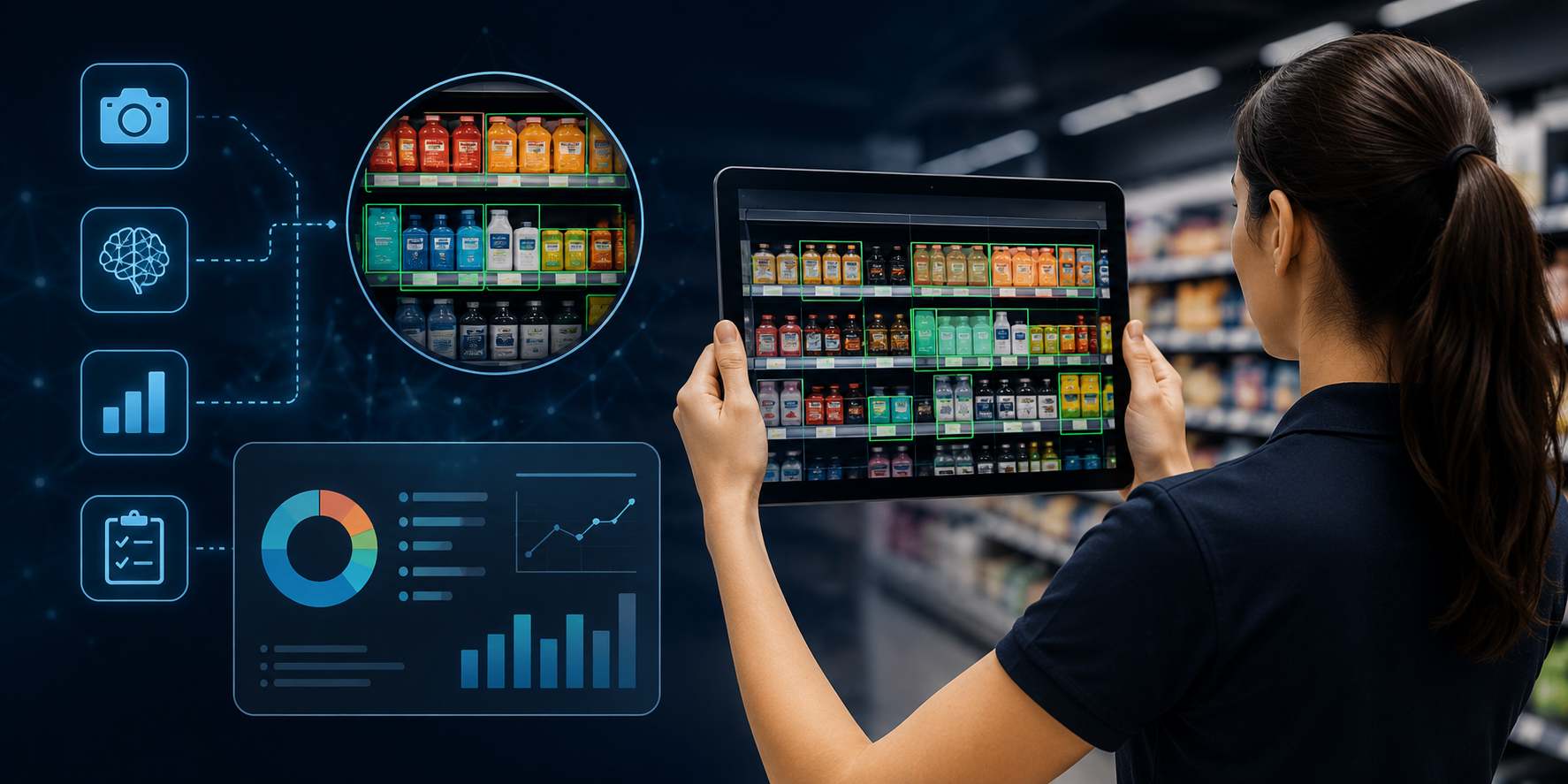
Image-based task verification
Where Pazo Stands Out
Most competitors in the market evolved from CMMS or maintenance systems.
Pazo is positioned closer to:
Retail operations execution
Daily facility operations workflows
Standardized execution management
Operational visibility across distributed locations
This makes it highly aligned with the intent behind modern searches for “facility operations software.”
Ideal Industries
Retail
Commercial real estate
Facility service providers
Multi-site enterprises
Healthcare operations
Warehousing & logistics
Franchise operations
2. Coast — Best for Maintenance-Centric Facility Teams
Coast focuses heavily on maintenance management, preventive maintenance, work orders, and asset tracking. Their content strategy strongly targets facility management and CMMS-related keywords.
Strengths
Work order management
Preventive maintenance
Asset tracking
Mobile maintenance workflows
Technician collaboration
Limitations for Operations Teams
More maintenance-focused than operations-focused
Less emphasis on operational execution workflows
Limited operational intelligence positioning
Best For
Maintenance-heavy teams
Mid-sized facilities
Asset maintenance operations
3. IBM TRIRIGA — Best Enterprise IWMS Platform
IBM TRIRIGA is positioned as an enterprise-grade integrated workplace management system (IWMS). Gartner positions it within enterprise facility and workplace operations ecosystems.
Strengths
Enterprise asset lifecycle management
Space management
Capital project management
Workplace management
Large enterprise integrations
Limitations
Complex implementation
Heavy enterprise setup
Longer deployment timelines
Requires significant onboarding
Best For
Large enterprises
Global facility operations
Complex workplace ecosystems
4. Facilio — Best AI-Driven Building Operations Platform
Facilio positions itself around connected operations, IoT-driven building management, and operational intelligence for modern facilities.
Strengths
Connected building operations
IoT integrations
AI-powered operational insights
Energy management
Asset lifecycle visibility
Limitations
More infrastructure-focused
May exceed needs for smaller operations teams
Best For
Smart buildings
Enterprise real estate portfolios
IoT-enabled operations
5. FMX — Best for Education and Public Sector Facilities
FMX is widely used for facility maintenance workflows, especially in education and public sector organizations.
Strengths
Facility scheduling
Work order management
Preventive maintenance
Asset management
Limitations
Traditional facility management orientation
Less operational workflow sophistication
Best For
Schools
Universities
Municipal operations
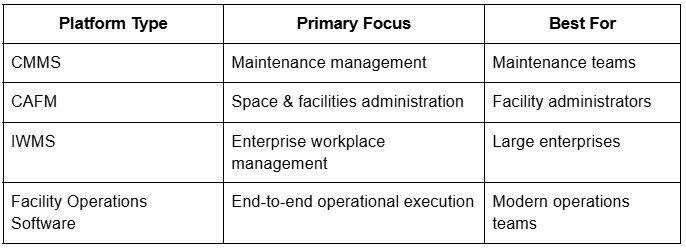
Facility Operations Software vs CMMS vs CAFM vs IWMS
Core Features to Look for in Facility Operations Software
Multi-Site Visibility
Operations leaders need centralized visibility across all facilities from a single dashboard.
Workflow Automation
Automated escalations, approvals, reminders, and operational SOPs reduce manual coordination.
Mobile-First Execution
Field teams require mobile access for:
Task completion
Audits
Image uploads
Checklists
Incident reporting
Operational Analytics
Modern operations software should provide:
SLA tracking
Task completion trends
Compliance performance
Site benchmarking
Workforce productivity insights
Asset & Maintenance Integration
Operations and maintenance can no longer operate in silos.
Who Needs Facility Operations Software?
Retail Chains
To standardize execution across stores and track operational compliance.
Commercial Real Estate
To manage vendors, maintenance, inspections, and tenant operations.
Healthcare Facilities
To ensure compliance, uptime, and operational consistency.
Warehousing & Logistics
To streamline operational workflows and facility coordination.
Facility Management Companies
To manage multiple client sites efficiently.
Final Verdict
If your goal is simply managing maintenance tickets, traditional CMMS and facility management platforms may work.
But if your organization needs:
operational visibility,
standardized execution,
multi-site coordination,
workforce accountability,
compliance tracking,
and real-time operational intelligence,
then modern facility operations software platforms like Pazo are far better aligned with how facilities teams operate today.
The market is shifting from “facility management” toward “facility operations.”
And the software category is evolving with it.
FAQs
What is the difference between facility management software and facility operations management software?
Traditional facility management software mainly focuses on:
Work orders
Preventive maintenance
Asset records
Maintenance scheduling
Facility operations management software expands beyond maintenance and includes:
SOP execution
Operational workflows
Multi-site coordination
Compliance tracking
Vendor management
Operational analytics
Workforce accountability
This broader approach supports modern operations teams that manage complex day-to-day execution.
Is a unified facility operations platform the same as a CMMS?
No.
A CMMS primarily handles maintenance-related tasks such as:
Work orders
Asset maintenance
Preventive maintenance
Technician scheduling
A unified facility operations platform combines maintenance with operational execution, audits, compliance management, field coordination, and centralized visibility across locations.
Who uses facility operations tools?
These solutions are commonly used by:
Retail chains
Commercial real estate companies
Healthcare organizations
Warehousing and logistics businesses
Manufacturing facilities
Facility service providers
Franchise operations
Enterprise operations teams
What features should businesses look for?
Important capabilities include:
Task and work order management
Preventive maintenance
Audit workflows
Mobile accessibility
Asset tracking
Compliance monitoring
Vendor coordination
Analytics dashboards
Incident reporting
Automated escalations
Why are businesses adopting modern operations platforms?
Organizations today need more than maintenance tracking.
Operations leaders increasingly require:
Real-time visibility
Standardized execution
Faster issue resolution
Accountability across teams
Data-driven decision-making
Multi-location coordination
This is why many companies are moving toward connected operational systems instead of standalone maintenance tools.
Which industries benefit the most?
Industries with distributed operations and complex workflows often see the greatest value, including:
Retail
Healthcare
Logistics
Hospitality
Commercial real estate
Manufacturing
Education
Facility services
What should I evaluate before choosing software?
Businesses should consider:
Ease of implementation
Mobile usability
Workflow flexibility
Reporting capabilities
Integration support
Scalability
Compliance features
Multi-site management
Vendor management functionality
Are these platforms suitable for small businesses?
Yes.
Many providers support both:
smaller teams looking to standardize operations,
and large enterprises managing hundreds of locations.
The ideal solution depends on operational complexity, workflows, and growth plans.
How do these systems improve operational efficiency?
Modern operations solutions help organizations:
reduce manual coordination,
automate repetitive tasks,
improve response times,
centralize operational data,
increase accountability,
and proactively manage issues before they escalate.
This leads to better consistency, reduced downtime, and improved operational performance.
Can these platforms integrate with IoT and smart building systems?
Yes.
Many modern systems integrate with:
IoT sensors
Building management systems (BMS)
Energy monitoring platforms
ERP software
Workforce management tools
Asset monitoring solutions
These integrations help create connected and data-driven operations environments.
Which is the best solution for operational teams?
The right choice depends on business needs.
For organizations focused on:
operational execution,
compliance workflows,
multi-site visibility,
workforce accountability,
and standardized daily operations,
platforms like Pazo are becoming strong choices for modern operations teams.
For businesses focused mainly on maintenance management, traditional CMMS tools may still be sufficient.
ABOUT THE AUTHOR
Sharjeel Ahmed
As someone who has built highly scalable products from the ground up, I've always been drawn to solving challenging problems. But it's the quest for operational excellence that truly lights my fire. The thrill of streamlining processes, optimizing efficiency, and bringing out the best in a business – that's what gets me out of bed in the morning. Whether I'm knee-deep in programming or strategizing solutions, my focus is on creating a ripple effect of excellence that transforms not just businesses, but the industry at large. Ready to join forces and raise the bar for operational excellence? Let's connect and make retail operations and Facilities Management better, together.
Enjoyed this read?
Stay up to date with the latest video business news, strategies, and insights sent straight to your inbox!

Thank you! Your submission has been received!
Oops! Something went wrong while submitting the form.